DA eThekwini · Water Recovery Plan

Durban is losing 65% of its water. It's time to fix the pipe, not the story.

A Democratic Alliance plan to put water back in Durban's taps — not tankers. Ten concrete steps. No sacred cows.

65%of purchased water lost before it reaches a tap
13,000+active leaks reported across the city
R2.9bnlost every year to leaks and burst pipes
The diagnosis

This isn't a drought. It's a governance failure.

Ten years ago Durban's water losses stood at roughly 33%. Today they exceed 65% — among the worst of any major South African metro. Cape Town, by comparison, loses about 24%. The city is paying to purchase water that never reaches its customers.

The city is buying water and watching it disappear before it reaches a home.

Floods have damaged infrastructure, but they don't explain two decades of sustained losses. This points to deeper failures in maintenance, planning, budgeting and political oversight.

R50bn outstanding municipal debt the DA plan would aggressively recover to help fund repairs
~Five plumbing teams reportedly servicing entire regions of several wards, after private contractors were terminated
R1m+ added to a senior water official's salary package on promotion — despite years of worsening losses
30+ contravention notices issued to the city over sewage spills, alongside ongoing legal action
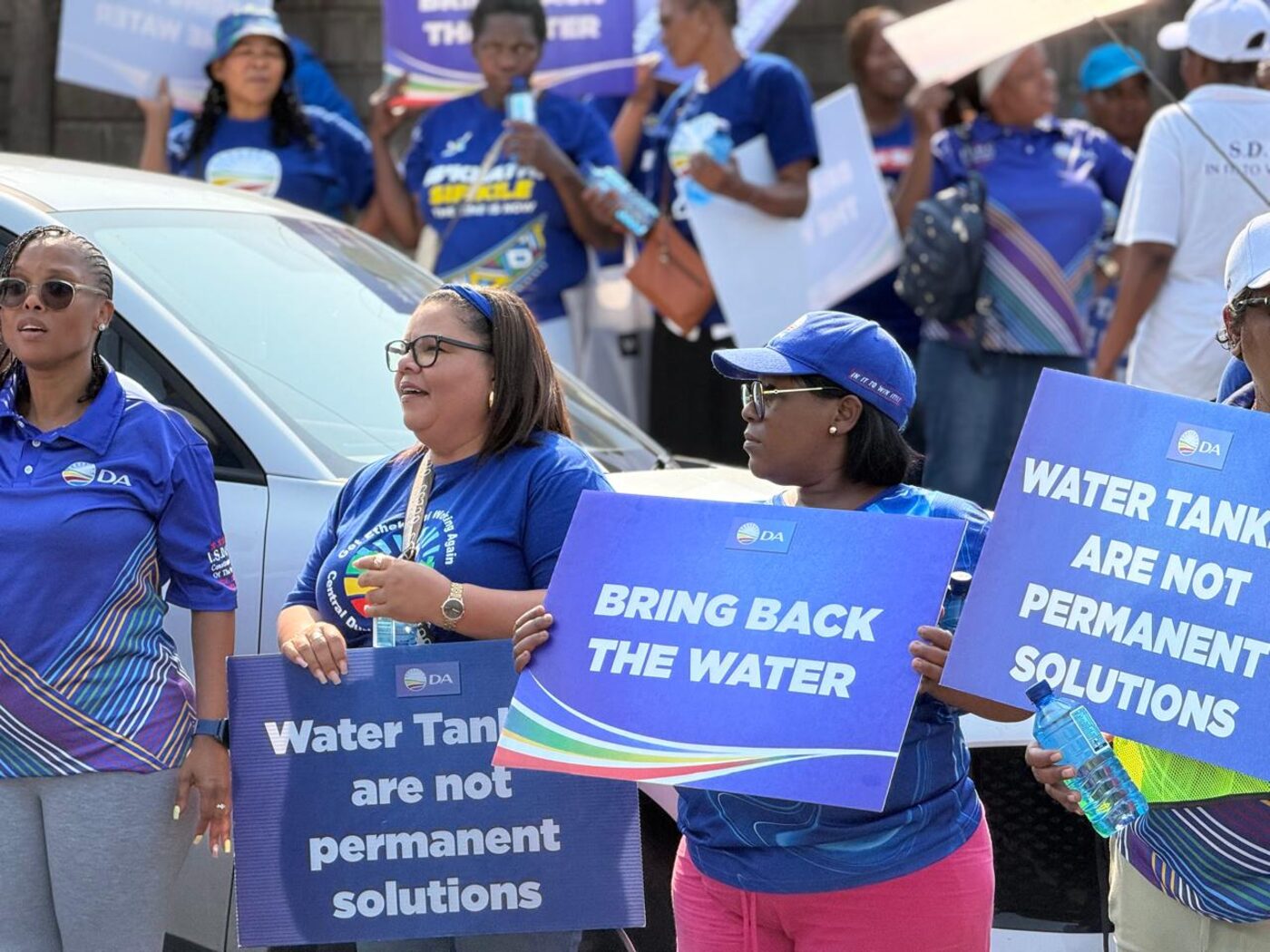
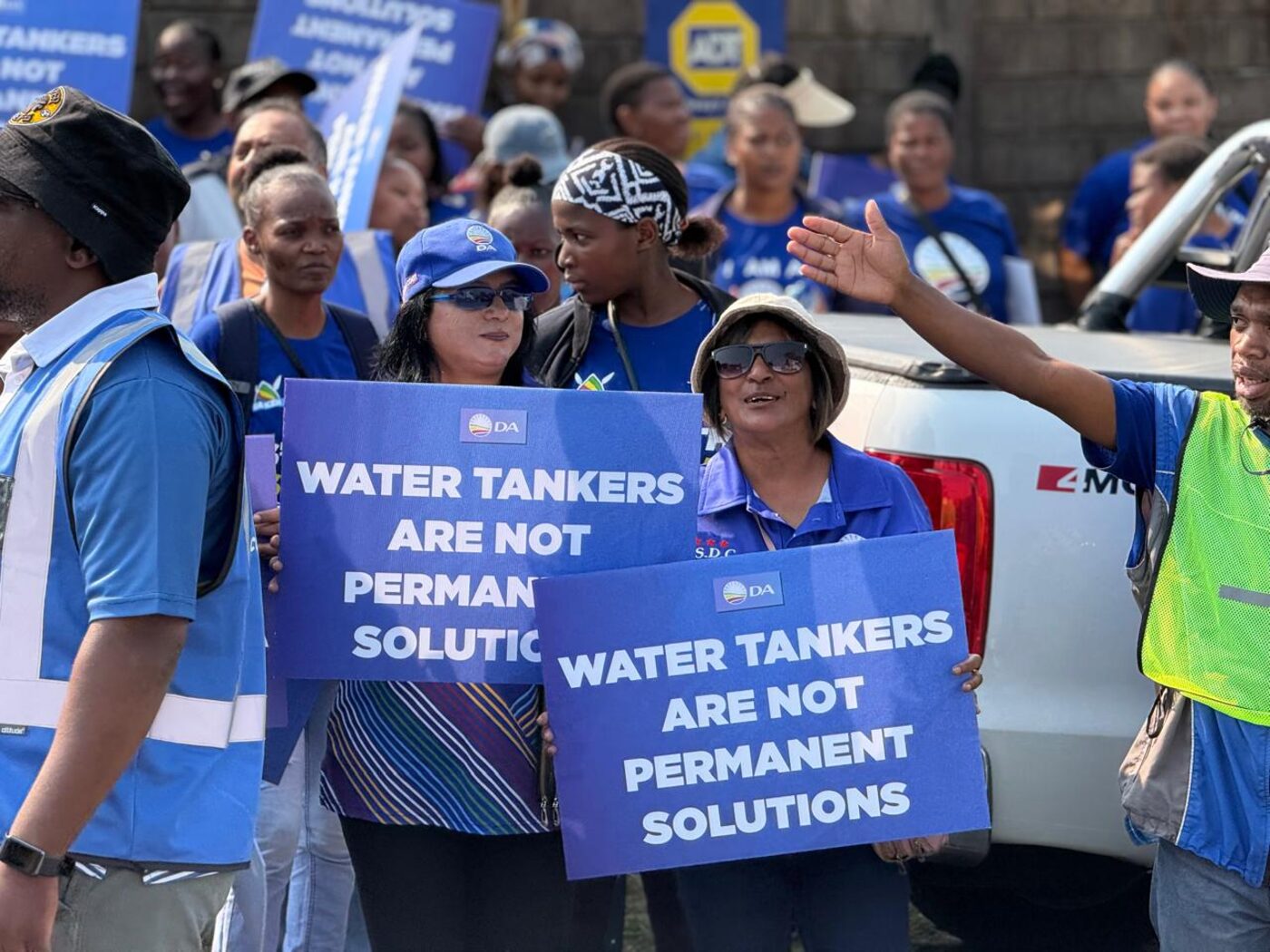
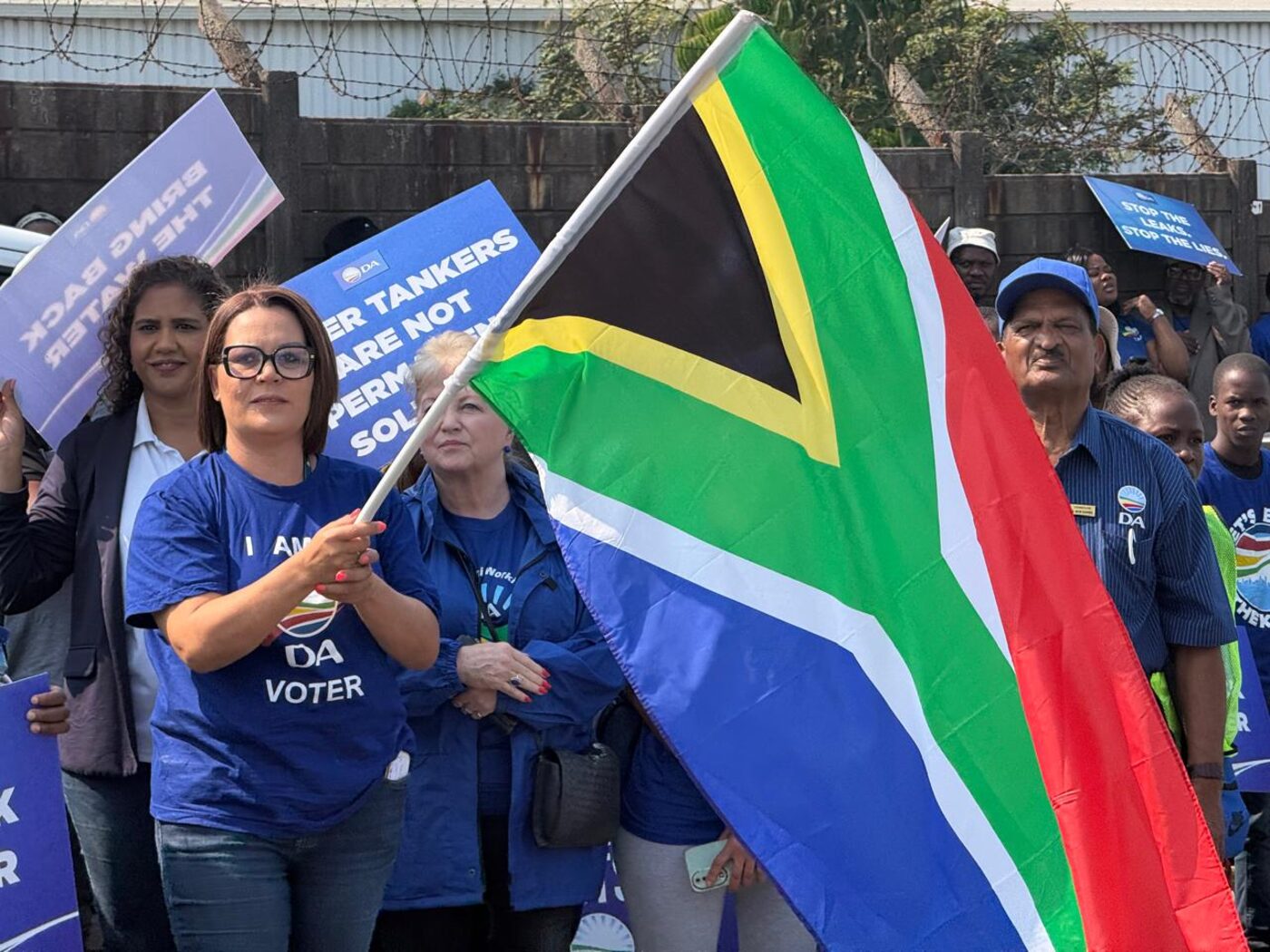
DA supporters holding signs reading 'Bring Back The Water' and 'Water Tankers Are Not Permanent Solutions' Durban residents rallying behind the plan
Water running from a household tap What should be reaching every home
Where the water is going

Every rand of lost water is money down the drain

The municipality loses water through two main channels: illegal connections and tankering operations, and direct leaks from ageing, unmaintained infrastructure. Residents are asked to conserve while the bulk of the waste happens before water ever reaches a household meter.

Illegal connections, tankering & amenities≈11%
Direct leaks from the network≈55%
Water that reaches paying customers≈35%
On the ground

Launching Taps Not Tankers in eThekwini

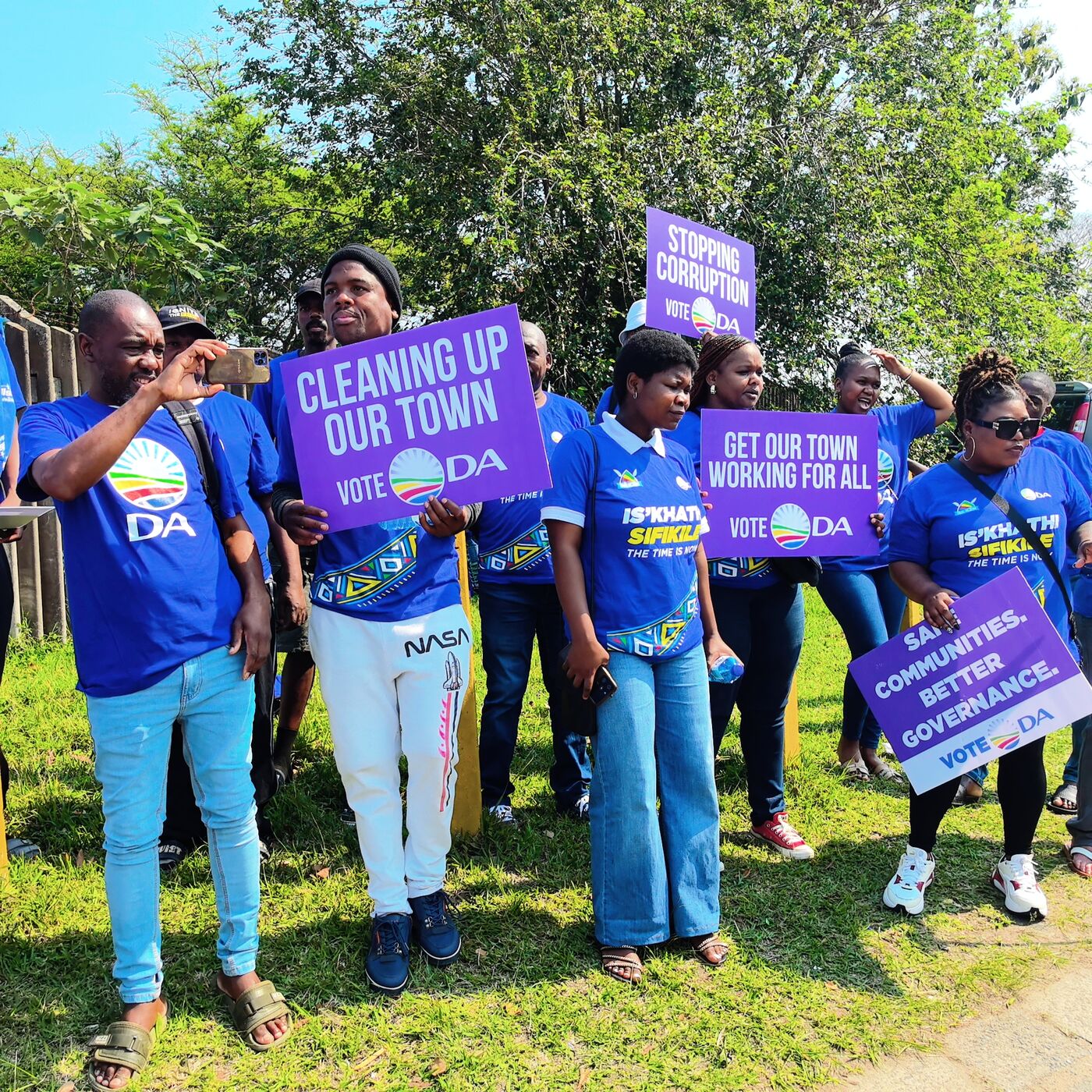
Haniff Hoosen and DA canvassers took the plan directly to residents across the metro — because a recovery plan only means something if the people it's meant to help have seen it and can hold the party to it.

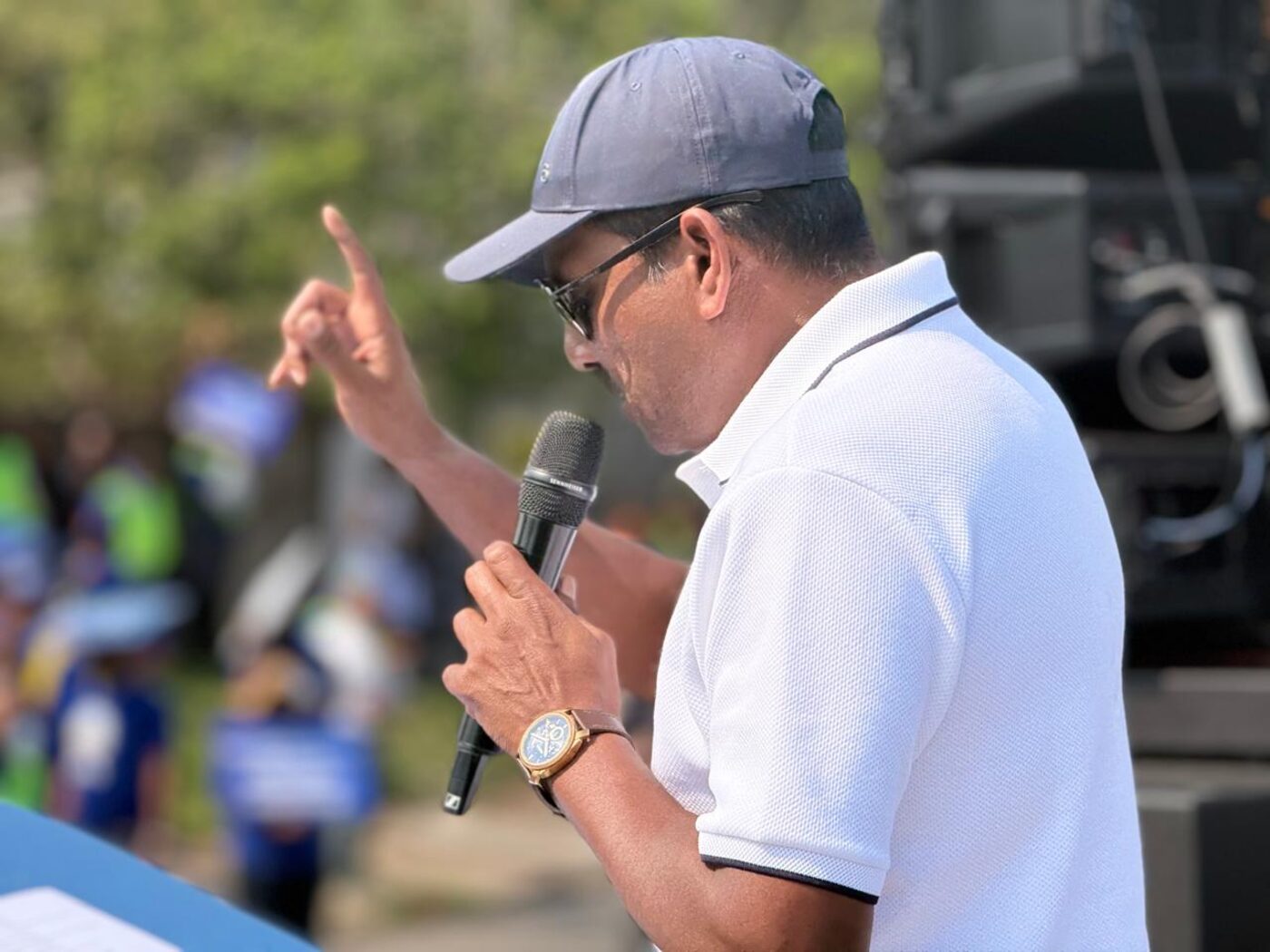
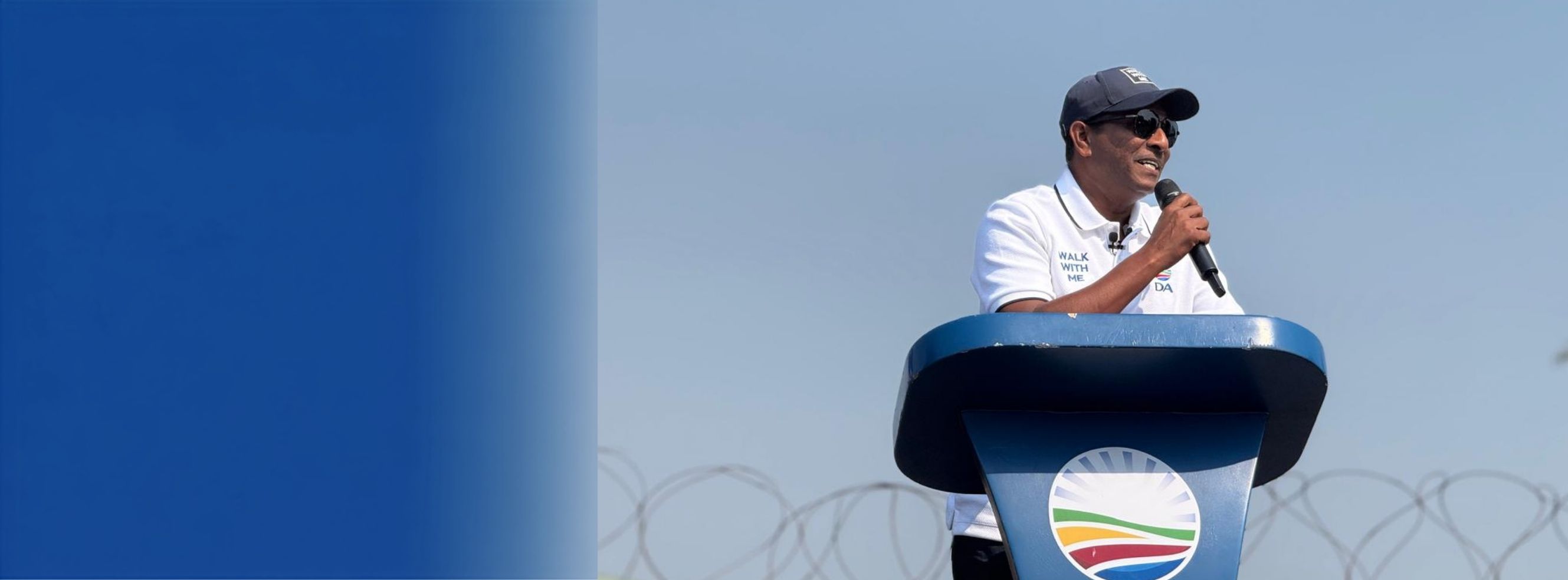
Haniff Hoosen speaking to supporters at the Taps Not Tankers launch Haniff Hoosen, DA eThekwini mayoral candidate
Taps not tankers

The 10-point water recovery plan

An emergency programme built on three principles: invest more to fix the infrastructure, professionalise the department, and hold people accountable.

Invest to fix
Professionalise
Hold accountable
1

Invest R10 billion to rebuild the water network

Immediately commit no less than R10 billion to repairing and replacing failing infrastructure, funded by cutting non-essential spend, recovering the city's roughly R50 billion in outstanding debt, and maximising existing grant funding.

2

Protect water revenue

Ring-fence all trading-services revenue and prohibit cross-subsidising water revenue to unrelated municipal functions. Money collected for water must be spent on water.

3

Put performance on the scoreboard

Set clear, measurable targets for senior managers on reducing losses, repairing leaks and improving response times — with real consequences when targets are missed.

4

Learn from municipalities getting it right

Partner with municipalities that have successfully cut water losses. Identify what works, adapt it, and implement it — Durban doesn't need to reinvent the wheel.

5

Bring in the private sector

Establish urgent partnerships with experienced engineering, technology and infrastructure companies for the specialist skills and capacity the municipality lacks.

6

Investigate the "water mafia"

A full investigation into procurement, contractors, illegal connections and internal municipal failures — engaging the President and the SIU where necessary. No political connections. No protected officials. No sacred cows.

7

Reinvest every saving

Every rand saved through reduced losses is ring-fenced and reinvested — into pipe replacement, reticulation upgrades, reservoir improvements and further leak-reduction.

8

Recruit the best technical skills

Attract experienced water engineers, project managers and technicians. Durban needs engineers who can fix the system — not bureaucrats who can explain why it can't be fixed.

9

Build a rapid-response repair force

New vehicles, plant and equipment, plus additional skilled plumbers, to establish dedicated teams that respond to major bursts and leaks around the clock.

10

Use technology to find leaks before they become disasters

Early leak detection, pressure monitoring, smart metering and predictive maintenance — moving Durban from reactive repairs to prevention.

Durban is speaking with one voice

Residents, councillors and canvassers — all backing the plan

Don't wait for the pipe to burst

Move Durban from reactive repairs to prevention

Proven international technology already exists to catch failures before they flood a street or drain a reservoir. The plan brings it to Durban's network.

Early leak detection
Pressure monitoring
Smart metering
Network mapping
Burst-prone area ID
Predictive maintenance
The promise

Water in every tap. Not tankers on every street.

Durban's water crisis did not happen overnight, and it won't be solved overnight. But it can be fixed — with political will, competent management and real accountability.

Get involved

Join the Taps Not Tankers WhatsApp group

Get updates on the campaign, share the plan with your neighbours, and help hold the municipality to its promises — straight from your phone.

Join on WhatsApp Opens WhatsApp in a new tab
or
Sign the petition
Join our WhatsApp group